
The automation audit: how to pick the first workflow worth automating
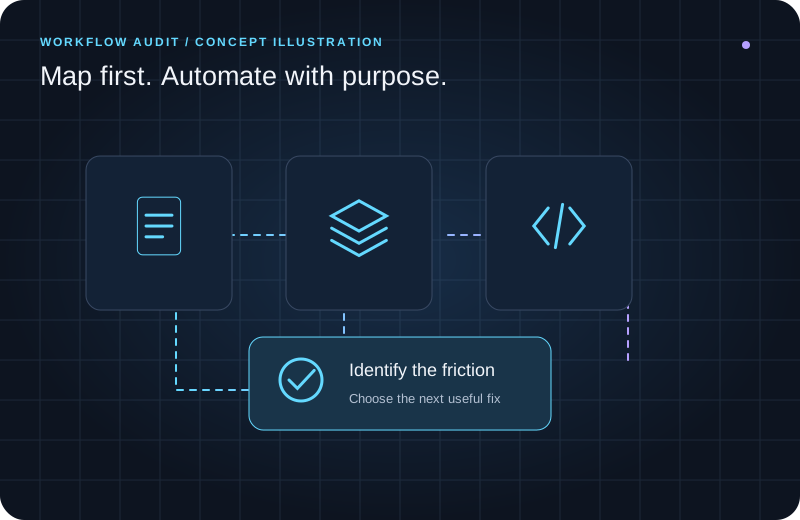
Ask five vendors where to start with AI automation and you will get five demos. The honest answer is less exciting: start with the workflow that is quietly costing you the most, and figure out which one that is before anyone writes code. That is the automation audit, and it is step one of every engagement we run.
Follow a record, not a feature list
Tools want to show you what they can automate. Your business will tell you what needs automating, if you watch it closely. Pick one real record and walk it end to end. A deal, from closed-won to first invoice paid. A support ticket, from opened to resolved. A new client, from signature to fully onboarded.
Sit with the people who touch that record and watch what actually happens, not what the process document says happens. Every time someone re-keys data between systems, forwards an email to keep things moving, or waits on a handoff nobody tracks, mark it. Those marks are the manual glue, and they are your map.
Count what each touch really costs
For every mark on the map, capture four things:
- Frequency. How many times a week does this happen, across everyone who does it?
- Time. Minutes per touch, counting the context switch, not just the typing.
- Error cost. What happens when it is done wrong? A typo in an internal note is free. A typo on an invoice is not.
- Wait. How long does the record sit between touches? Elapsed time is where cycle time hides, and cycle time is what customers feel.
You do not need a consulting engagement for this. A spreadsheet and three honest conversations will get you most of the picture.
What a strong first candidate looks like
Score your candidates and one or two will separate from the pack. The best first automation usually has the same profile:
- It happens constantly. Daily volume beats the quarterly horror story, because the payback compounds every single day.
- The rules are known. The person doing the work today can explain their decisions. If they can say it, we can build it.
- The inputs already live in systems. CRM, billing, help desk, inbox. No new data entry required.
- Mistakes are visible and reversible. Your first workflow should be one where a miss gets caught in review, not discovered by a customer.
Notice what is not on the list: whatever is trendiest this quarter. The right first workflow is boring, frequent, and expensive. That is exactly why it pays.
Design the approval gate before the workflow
Before building anything, decide where a person approves the output. We hold that line in every production system we ship: the machine drafts, a human approves, the systems update themselves. The point was never to remove your people from the work. It is to remove the re-keying and the chasing from your people, so their week goes to the work that needs their judgment.
Then prove it in ninety days
Scope the first workflow so it ships and shows its numbers inside a quarter: touches removed, hours returned, cycle time down. A first win the team can feel builds the trust that makes the second and third automation easy. A six-month platform project that has not automated anything yet does the opposite.
This audit is the first step of our AI workflow automation practice, and we run it as a working session, not a sales pitch. If you want the map without the guessing, book a strategy call and we will find your highest-payback workflow together.