
Human-in-the-loop: the only AI automation pattern we trust in production
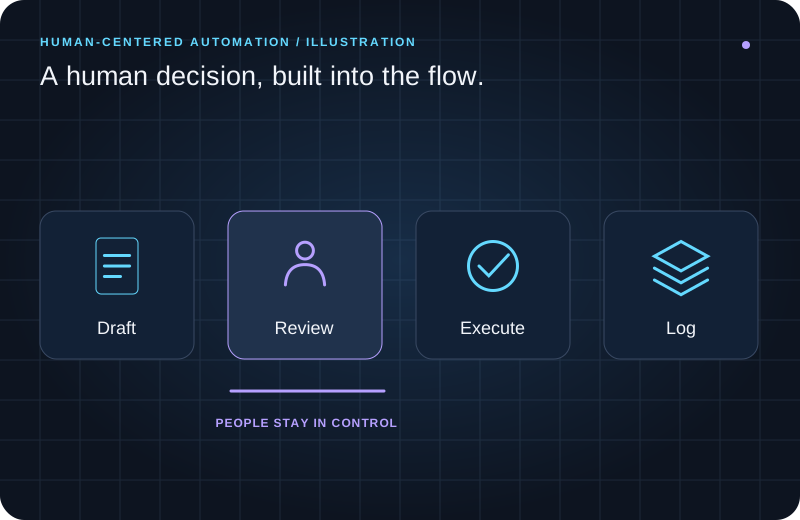
AI can draft almost anything now: contracts, invoices, emails, journal entries, onboarding plans. The tempting next step is to let it send them too. That is where we stop. In production systems that touch money, customers, or compliance, we build exactly one pattern: the machine drafts, a human approves, the system executes, and everything gets logged.
Why full auto fails in the real world
Demos are built on happy paths. Operations are built on exceptions. The customer with two billing entities. The deal with a hand-negotiated discount. The invoice that is right in the CRM and wrong in the ERP. Full automation handles the ninety percent and then quietly does the wrong thing with the ten percent that matters most.
And when it fails silently, you pay twice: once to find the damage, and again in the trust your team loses in the whole system. One bad auto-sent invoice can undo a quarter of automation goodwill.
The pattern that works
- The machine drafts. AI does the reading, the cross-referencing, and the first version. This is where the hours are saved.
- A human approves. One person sees a clean summary and a diff of what will happen, and clicks approve or fix. Seconds, not minutes.
- The system executes. After approval, every downstream system updates itself. No re-keying.
- Everything is logged. What ran, what it read, who approved, what changed. When someone asks why, there is an answer.
Where the gate belongs
Not everywhere. Approval fatigue kills automation as surely as silent errors do. The gate belongs where mistakes are expensive or hard to reverse:
- Money moves: invoices, refunds, payouts, pricing changes
- External communication: anything a customer or partner will read
- Contract terms and legal documents
- Bulk writes to systems of record
Reversible, low-stakes, internal steps can and should run fully automatic: enrichment, matching, filing, tagging, status syncs, report refreshes. The skill is drawing that line deliberately instead of discovering it in an incident.
A design checklist
- Can the approver see everything they need on one screen?
- Is approving faster than doing the task manually ever was?
- Does every exception route to a person instead of a dead end?
- Is there a log a non-engineer can read?
- Can you turn any single automation off without breaking the rest?
- Does the team know the machine works for them, not the other way around?
That last one is the point. The goal was never to remove people from the process. It is to remove the process from people, the re-keying and the chasing, so the team you already have can do the work that actually needs their judgment.
This is the pattern behind every workflow in our AI workflow automation practice. If you are weighing where automation fits your operation, book a strategy call and we will map it together.